


Vector
4.7108.57K Reviews
App Specs
- Version
- 2.9.5
- Updated On
- License
- Free
- Downloads
- 100,000,000+
- Developer
- NEKKI
- Categories
- Arcade
- Platform
- Android, iOS
Screenshots




 Analysis by AppCompare
The first thing I notice about Vector is how much of its personality comes through in motion. This is an arcade game built around a runner’s split-second decisions: keep moving, read the obstacle ahead, and choose the right parkour action before the chase catches up. I like that the central appeal is not collecting a complicated set of controls, but learning to read the course and act at exactly the right moment.
A runner where timing matters more than button combinations
That focus makes the game easy to understand but gives it room to test your patience. A swipe can trigger a jump or slide, yet the useful question is not simply which gesture to make; it is when to make it. React too early and the move may not carry you cleanly past the obstacle. Wait too long and a promising run can end abruptly. The pleasure comes from gradually recognizing the rhythm of a section rather than trying to overpower it with frantic tapping.
This is a particularly good fit for brief play sessions. I can start a level while waiting for a drink or taking a short break, make a few attempts, and put the phone away without needing to remember a complex control scheme. At the same time, a quick restart can turn a spare minute into several more tries, so it is easy to lose track of a break if I am chasing a cleaner run.
How to get more from each attempt
I get the best results when I watch slightly ahead of my runner instead of staring at the character. The silhouette is clear, but the upcoming obstacle is what tells me which action to prepare. Once I have failed at a spot, I treat that attempt as a cue to adjust one thing: the timing, the move, or my attention to the next hazard. Changing one choice at a time makes a repeated section easier to learn than swiping differently at random.
There is also a useful distinction between simply reaching the end and completing a stage to a higher standard. If I am stuck, I sometimes make a safe run first to understand the layout, then replay with a more deliberate aim. That approach reduces the pressure to perform every move perfectly on the first go. It also helps explain why a stage can remain interesting after I already know its route: execution still matters.
For someone who prefers a calm, forgiving game, that retry loop may feel demanding rather than satisfying. Vector asks for attention during the action, and repeated mistakes can become frustrating when I am tired or distracted. I would choose a slower puzzle or a relaxed idle game in those moments. This is a better match when I want a compact challenge that rewards focus, not something to leave running in the background.
Where it fits among mobile arcade games
Compared with an endless runner that asks me to dodge for as long as possible, this parkour-focused experience puts more emphasis on learning the timing of designed stages. That gives retries a purpose beyond trying to last longer: I can work on a particular sequence and see whether my next attempt is cleaner. It feels different from a platform game built around broad exploration, too, because the momentum of the chase keeps the action moving forward instead of inviting me to linger and inspect every corner.
Worth Reading Before You Choose

Flipboard Shows What News Apps Must Do Beyond the Feed

Switching to Android Auto Means Rethinking Your Driving Routine

Google Calendar Makes a Crowded Week Easier to Manage

Ludo King Makes the Most of the Minutes Between Plans

Baby Panda World Brings Quick Play to Modern Phones, but Its Game Library Feels Busy

ESPN’s Live Game View Makes Following Close Games Easier
The trade-off is that people who want open-ended routes, leisurely exploration, or long-form strategy may not find the same appeal here. Its strength is concentrated in the run itself. I would also avoid treating every failure as proof that the controls are unreliable; often the more useful question is whether I read the obstacle early enough. Still, a game this dependent on precise timing is less comfortable to play when my attention is divided or I cannot make a clear swipe.
Who is likely to enjoy the chase
I would recommend it to players who like compact arcade challenges, responsive gestures, and the satisfaction of turning a failed attempt into a better-timed one. It can suit a commute or a short wait when I have enough attention to follow the action, and its straightforward premise makes it approachable even if I do not usually seek out complicated mobile games. The strongest reason to stay is the sense that improvement comes from my own timing rather than from studying a pile of systems.
It is a weaker choice for someone looking for an especially gentle experience, an open world, or a game that does not punish lapses in concentration. The chase gives every run urgency, which is exciting when I am in the mood for it and tiring when I am not. I would keep that distinction in mind before deciding whether this should be my go-to game for every spare moment.
So, I recently got my hands on Vector, and let me tell you, it’s quite the ride. If you’re a fan of fast-paced parkour action, this game might just be your next obsession. Available on both Android and iOS, Vector offers a unique blend of arcade fun and skill-based challenges that’ll keep your thumbs busy and your adrenaline pumping.
Unleashing the Inner Parkour Pro
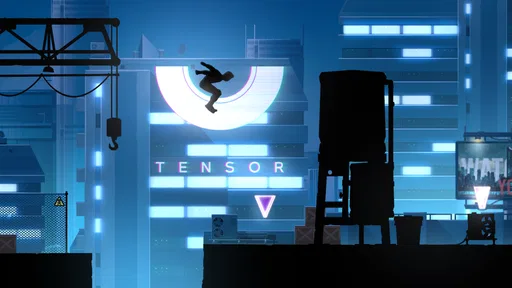
Right off the bat, what captivated me about the game is its sleek and minimalistic design. The game places you in a dystopian future where freedom is just a lost concept. Your character, a silhouette of rebellion, is on the run, and it’s your job to navigate through various obstacles using some seriously cool parkour moves.
Gameplay Mechanics: Simple Yet Engaging
One of the things I appreciate most about the game is its intuitive controls. You simply swipe to jump, slide, and run. This simplicity doesn’t mean it’s easy, though. The levels are designed to challenge your timing and precision. As you progress, you’ll need to master more advanced moves, which adds a layer of depth to the gameplay.
The animations are fluid and satisfying, making each successful jump and roll feel like a small victory. It’s all about momentum and timing, and once you get into the flow, it’s incredibly rewarding.
Visuals and Sound: A Feast for the Senses
The visuals are strikingly simple yet effective. The silhouette art style is not just a design choice but a thematic representation of the game’s story. The backgrounds are detailed enough to immerse you in this bleak world without distracting from the action.
The sound complements the visuals, with intense background music that adds urgency as I dash and leap across rooftops. I find it gives a successful run extra momentum, though anyone who prefers quiet play may want to lower the volume or play without music.
Levels and Challenges: More Than Meets the Eye
What keeps the experience fresh is its variety of levels and challenges. Each stage introduces new obstacles and requires different strategies to overcome. You’ll find yourself replaying levels to perfect your runs, aiming for that elusive three-star rating.
Additionally, the game includes bonus levels and special missions. These are a welcome change when I want a different kind of test from the main route, though the core attraction remains the same: judging obstacles and making the right move under pressure. If you enjoy refining a run, that repetition can feel purposeful; if you mainly want new scenery and a different activity each time, it may feel narrower.
Customization and Progression
As you play, you can unlock new moves and outfits for your character. This customization adds a personal touch and gives me another reason to keep going. I find it most satisfying when unlocking a move also encourages me to pay closer attention to how a stage can be handled, rather than treating every run as a race to the finish.
There is a practical trade-off for completion-minded players: chasing every unlock or the best result can turn a short arcade session into a longer routine of replaying familiar sections. I would set a small goal before starting, such as learning one difficult sequence, instead of assuming every session needs to clear a whole collection. That keeps the game’s focused design working in its favor and makes it easier to stop when I have had enough.
Playing in everyday moments
A realistic use for this kind of game is a short wait when I have both hands free and can give the screen my attention: sitting before an appointment, for instance, rather than trying to play while walking or multitasking. I can attempt a stage, notice where my timing slips, and use the next try to correct it. That makes the session feel more engaging than casually scrolling, but it also means this is not a good choice when I need to keep my attention on people or what is happening around me.
If a run keeps ending at the same obstacle, I would resist swiping faster. Instead, I would take a moment to identify the action the obstacle calls for and watch the approach on the next attempt. That small change in mindset is more useful than treating the game as a test of reflex speed alone. The visual simplicity helps me read the action, but it does not remove the need to concentrate.
What to know before installing
NEKKI’s arcade game is free to download, and it has a 4.7 average from around 3.7 million ratings, alongside more than 100 million installs. It is rated Everyone 10+, and the current version is 2.9.0; devices need Android 7.0 or later. The game also offers in-app purchases, with items ranging from $0.99 to $129.99, so I would check the purchase details before spending and keep that in mind if a child will be playing.
Those figures suggest a large audience, but popularity does not tell me whether the retry-heavy style will suit a particular player. I would install it for the timing challenge, not because I expect a relaxed runner or an expansive adventure. Someone who wants to move through levels at their own pace may be happier with a slower platform game, while a player who enjoys repeating a tight sequence to improve execution is more likely to appreciate what this one does well.
Why You Should Give Vector a Try
If you’re looking for a game that’s easy to pick up but hard to master, Vector is worth a shot. It combines the thrill of parkour with a compelling narrative and an art style that’s both unique and engaging. Whether you’re a casual gamer or a hardcore completionist, there’s something here for you.
In conclusion, Vector is more than just another mobile game. It’s an experience that challenges your reflexes, entertains your senses, and keeps you coming back for more. So, lace up your virtual running shoes and dive into the world of Vector. You won’t regret it!
Pros
- Smooth and intuitive controls.
- Stylish parkour animations.
- Challenging level design.
- Engaging soundtrack.
- Minimalistic yet appealing graphics.
Cons
- Repetitive gameplay may bore some.
- Limited character customization.
- Ads can be intrusive at times.
- In-app purchases for progression.
- Occasional performance hiccups.
FAQs for Vector
What is Vector about?
Vector is an action-packed arcade game that immerses players in a thrilling parkour chase. Set in a dystopian future, you play as a free runner escaping from a totalitarian regime. The game features smooth animations and dynamic, fast-paced gameplay, making it a favorite among fans of action and parkour games.
Is Vector free to play?
Vector is available as a free download with optional in-app purchases. While you can enjoy the main storyline without spending money, additional content, such as extra levels and character upgrades, can be unlocked through purchases. This allows players to enhance their experience and support the developers.
What platforms is Vector available on?
Vector is available on both Android and iOS platforms. It can be downloaded from the Google Play Store for Android devices and the Apple App Store for iOS devices. This ensures that players across a wide range of smartphones and tablets can enjoy the game’s captivating parkour action.
What are the system requirements for Vector?
For Android users, Vector requires at least Android version 4.0.3 and up, ensuring compatibility with most modern devices. iOS users need to have iOS 9.0 or later. It’s important to have a device that meets these requirements to ensure smooth gameplay and optimal performance.
Does Vector require an internet connection?
Vector does not require a constant internet connection to play. It can be enjoyed offline, making it ideal for gaming on the go. However, an internet connection may be needed for downloading updates or accessing certain features, such as in-app purchases or leaderboards.


